 KH
KH  FR
FR  AR
AR CN
CN“2024 E-Commerce in Cambodia” Report Launched
AKP Phnom Penh, February 25, 2025 --
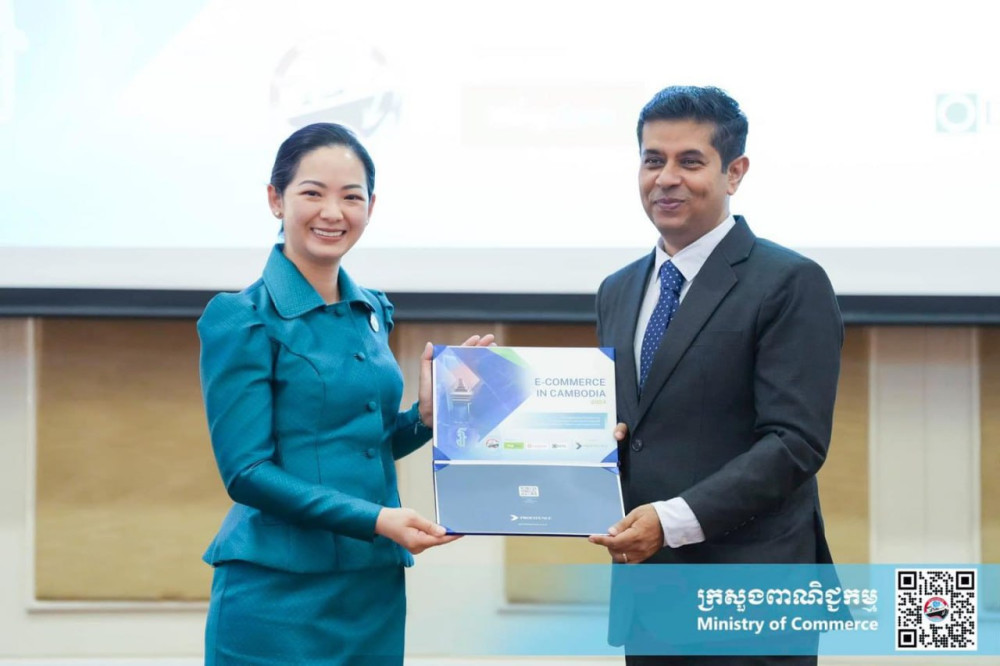
The Ministry of Commerce has launched the “2024 E-Commerce in Cambodia Report”, which will serve as an important reference for policymakers, businesses, and development partners seeking to advance Cambodia's E-commerce agenda.
The official launching ceremony was held on Feb. 24 under the presidency of H.E. Mrs. Cham Nimul, Minister of Commerce, and key figures from relevant ministries and institutions, academics, and private sector.
The Ministry of Commerce is taking decisive steps to become more fit-for purpose in supporting Cambodia's E-commerce and digital trade ambitions, H.E. Minister said.
By strengthening its institutional capacity, the ministry aims to provide more dedicated and targeted support to the industry, ensuring that businesses and consumers alike can fully leverage the opportunities presented by digital transformation, she continued.
The comprehensive report will serve as an important reference for policymakers, businesses, and development partners seeking to advance Cambodia's E-commerce agenda, H.E. Mrs. Cham Nimul added.
“The 2024 E-commerce Report provides a comprehensive analysis of Cambodia's E-commerce landscape and outlines key considerations for the expansion of E-commerce and digital trade,” she said.
The study, enriched by extensive consumer surveys and expert interviews, provides actionable recommendations tailored to the Cambodian context, addressing both opportunities and challenges faced by businesses and policymakers, according to PROFITENCE (Cambodia) Co., Ltd, which produced the report.
As Cambodia continues to deepen its digital integration, the evolution from E-commerce to a broader digital trade ecosystem will be instrumental in ensuring long-term economic resilience and global competitiveness, the minister said, underlining that the report arrives at a pivotal moment, as Cambodia navigates its journey towards LDC graduation in 2029.
The report recommended that improving nationwide inclusivity will require advancements in infrastructure, strengthened regulations, localised strategies, and enhanced consumer education.
By Chea Vannak