 KH
KH  FR
FR  AR
AR CN
CNSamdech Thipadei Shares His Recently Discovered Photos of 2011 Cambodia-Thailand Border Negotiations
AKP Phnom Penh, March 02, 2025 —
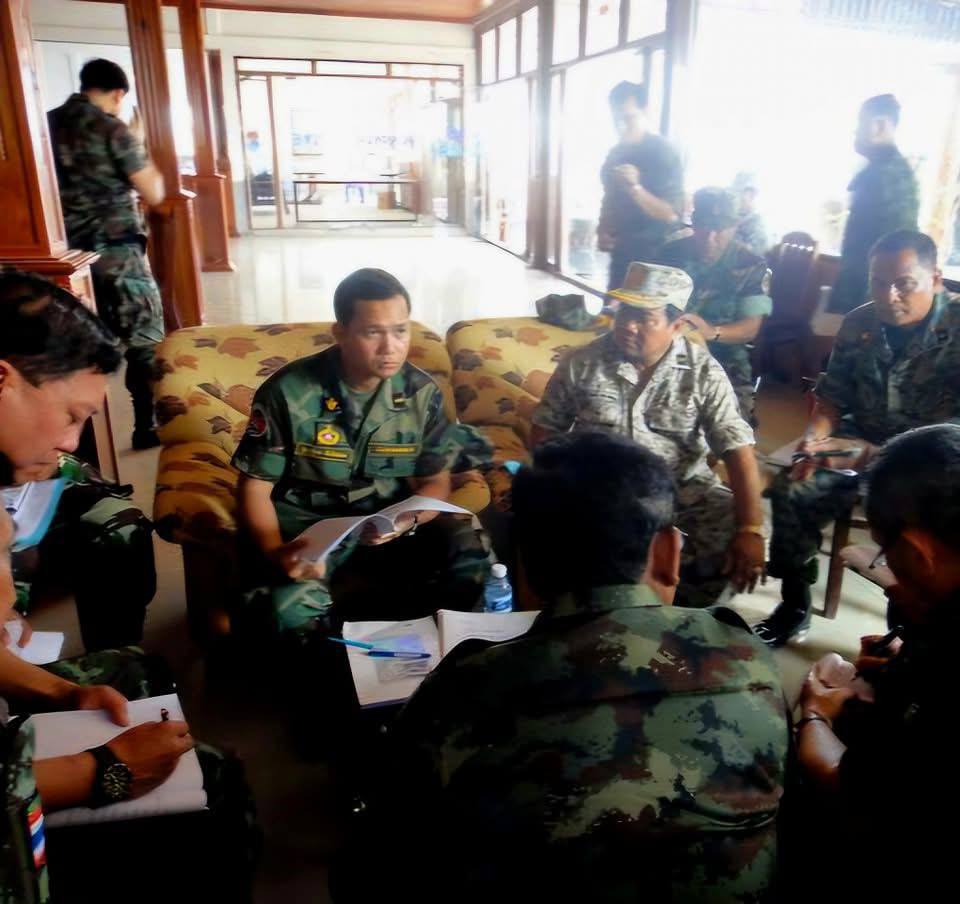
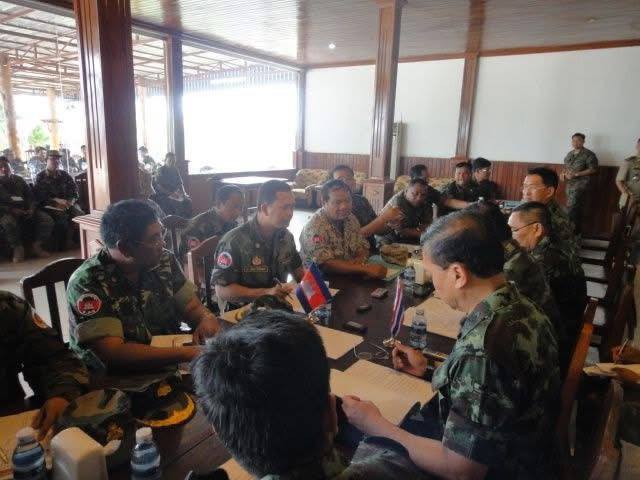
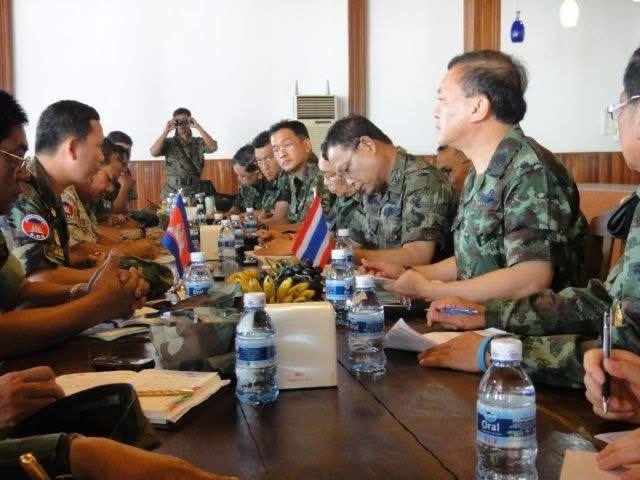
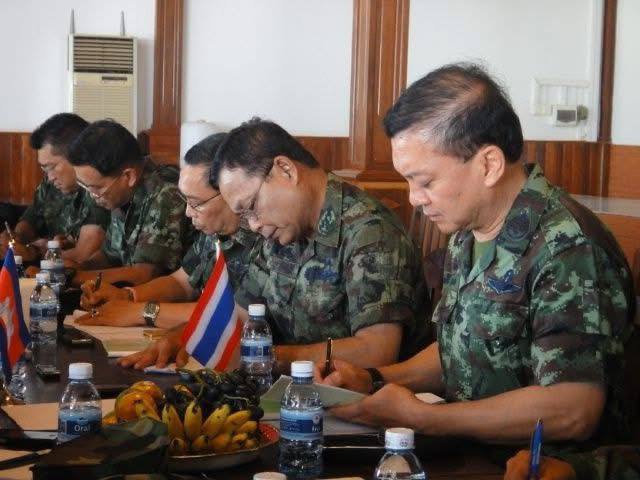
Cambodia’s Prime Minister Samdech Moha Borvor Thipadei Hun Manet has shared his rare discovered photographs from Feb. 19, 2011, capturing a crucial moment in diplomatic efforts to de-escalate armed clashes between Cambodia and Thailand.
These images, taken at the Choam-Sragam border crossing in Cambodia’s Oddar Meanchey province, depict a high-level negotiations aimed at securing a ceasefire between the two nations’ militaries, he said on his social media networks this morning.
At the time, he continued, the Cambodian delegation was led by me, serving as Deputy Commander of the Royal Cambodian Army, alongside General Chea Mon, then-Commander of Military Region 4, and General Srey Dek, Commander of the 3rd Infantry Division. The Thai delegation was headed by the Commander of the Thai Army’s 2nd Infantry Division.
“Our objective was to put an end to hostilities that had erupted in 2008 near Preah Vihear Temple and later spread to Ta Moan and Ta Krabei temples in 2011,” the Premier added.
It is important to clarify that the fighting was not initiated by either country’s military or government. Instead, it stemmed from the actions of a handful of Thai ultra-nationalist politicians. Under the pretext of patriotism, they trespassed into Cambodia’s sovereign territory and occupied Wat Keo Sekha Kirisvara, a pagoda near Preah Vihear Temple, on July 15, 2008.
What started as a localised provocation soon escalated into a prolonged military confrontation, lasting over three years. The clashes caused casualties on both sides and forced thousands of Cambodian and Thai civilians to flee their homes. Relations between the two nations suffered significantly across multiple sectors.
The conflict serves as a stark reminder of the dangers of extremist nationalism and reckless political actions. It underscores the need for careful diplomacy and thoughtful decision-making to prevent violent confrontations.
Both Cambodian and Thai citizens have the right to love their country and defend their homeland. However, our two nations are neighbours, bound by geography and history.
The lingering border disputes—legacies of the past—must be resolved through technical and legal frameworks, based on international law and established bilateral mechanisms. Only through such approaches can we prevent the recurrence of violence like that seen between 2008 and 2011.
“I was born after the wars of the 1970s and was still a child during Cambodia’s civil war in the 1980s and early 1990s. But I firmly believe that the border clashes from 2008 to 2011 were no different from past conflicts—bringing no real benefits to either side,” Samdech Thipadei said.
The ones who truly suffered were the soldiers on the front lines and their families, as well as the civilians caught in the crossfire.
Meanwhile, those who incited the violence—the ultra-nationalist politicians—were never on the battlefield. When the fighting broke out, they were safe, hundreds of kilometers away from the conflict zone.
“This should be a lesson for both Cambodians and Thais: we must do everything in our power to ensure that history does not repeat itself,” the Prime Minister underlined.
By K. Rithy Reak