 KH
KH  FR
FR  AR
AR CN
CNRoyal Government Vows to Combat Online Scams to Protect Country's Reputation
AKP Phnom Penh, March 10, 2026 --
“Don’t believe the false promise that money is easy to earn.”
This is the warning from a 22-year-old Indonesian man who said he was stranded in Cambodia for more than three years after being lured by a friend with the promise of a high-paying job.
Speaking to AKP at a public park in Phnom Penh recently, the young man from West Sulawesi –identified here as Andy Agus – said he arrived in Cambodia in 2022 on a tourist visa after graduating from high school.
He said he hoped to find a job earning between US$800 and US$1,000 per month, after being told by a friend that well-paid and easy jobs were widely available in the country.
“I decided to leave West Sulawesi with my friend because he told me there were many good jobs in Cambodia with high salaries,” Andy said.
However, after arriving in Cambodia, he and his friend were taken to Preah Sihanouk province with the promise of a monthly salary of US$800. In reality, he said he received less than US$200 after deductions for travel, food, accommodation, and other expenses.
Andy declined to discuss the exact nature of the work he was assigned, only saying that the company owner was Chinese.
He worked with the friend who accompanied him for only one month before they were separated and never met again. The acquaintance who initially persuaded him to travel to Cambodia also disappeared after his arrival.
Since then, Andy said he had been moved by his employer to several locations across the country, including Preah Sihanouk, Mondulkiri, Kampot, Poipet, Bavet, and finally Phnom Penh.
He was eventually able to leave after authorities carried out crackdowns on online scam operations.
A Pakistani man, who spoke to an AKP reporter at a rest area along the Phnom Penh-Preah Sihanouk Expressway, shared a similar experience. He said he had come to Cambodia seeking employment but ended up stranded in Preah Sihanouk province.
The man claimed he was trying to find a way to return home after his Chinese employer had abandoned the group for about a week.
Like Andy, he said he fell into the trap of an online crime group after being persuaded by acquaintances and was unable to move freely due to strict control by supervisors.
Both men said they only felt safe speaking publicly after their employers and team members had fled.
According to the Secretariat of the Commission for Combating Online Scams (CCOS), Cambodian authorities have taken action against more than 200 online scam cases across 2,500 locations over the past eight months.
During the operations, authorities deported more than 8,000 foreigners and filed legal cases against over 500 ringleaders and gang members.
In addition, more than 223,600 foreigners, including nationals from China, Vietnam, India, Bangladesh, and Pakistan, have voluntarily returned to their home countries.
The Cambodian authorities have pledged to intensify the crackdown and aim to clean up the situation by April this year.
However, Prime Minister Samdech Moha Borvor Thipadei Hun Manet stressed that the fight against these crimes will not stop after that deadline.
Speaking at the closing ceremony of the annual meeting of the National Authority for Combating Drugs (NACD), the Prime Minister said the crackdown must continue as long as such crimes exist. “Suppressing and taking legal measures against these crimes is a commitment for the future of our nation, not something done merely to complete a checklist,” he said.
Samdech Thipadei also noted that the current global situation remains fragile and complex, creating opportunities for criminal networks to develop both traditional and non-traditional tactics.
“In such circumstances, we must strengthen our efforts to eliminate weaknesses and reinforce what is strong,” he said.
The Prime Minister further explained that economic activities can be broadly divided into three categories: the black economy, the grey economy, and the white economy.
The black economy, he said, involves foreign criminal groups using Cambodia as a base to extract illicit profits from abroad.
The grey economy refers to individuals who benefit locally from such activities, such as property owners renting buildings or workers indirectly linked to the operations.
Meanwhile, the white economy represents legitimate sectors including agriculture, tourism, industry, and services.
“We must not allow the black and grey economies to undermine the white economy where our citizens earn their livelihoods sustainably,” he stressed.
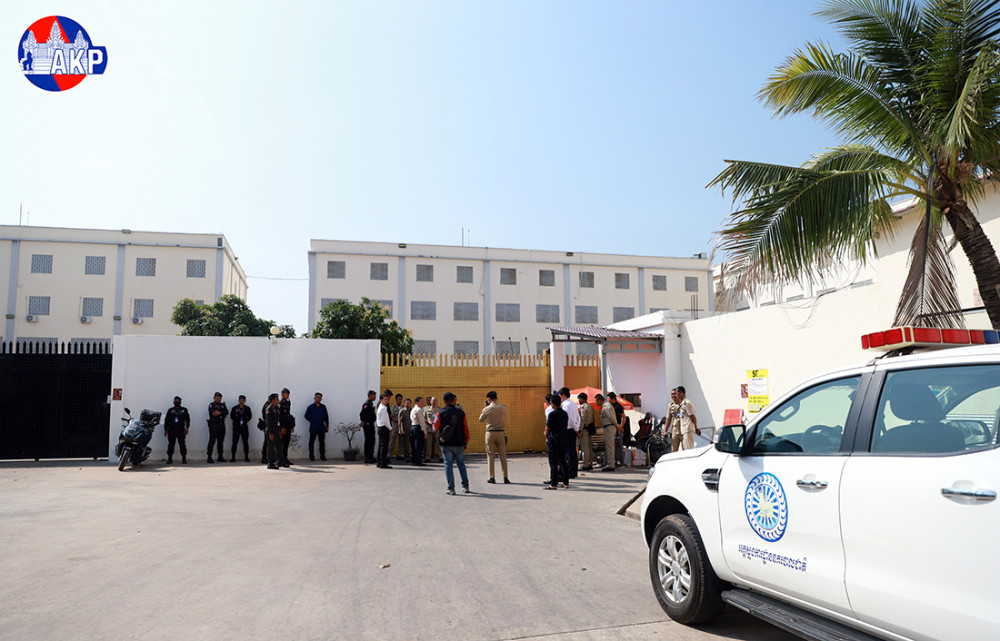
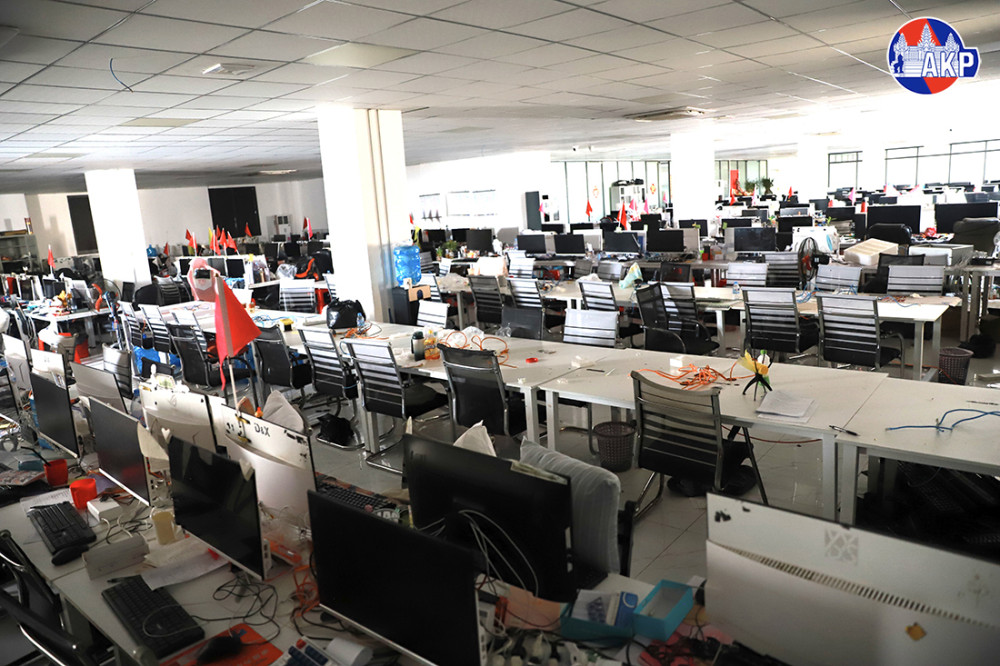
Authorities say the crackdown has already led to the closure of several suspected locations linked to online scam activities, including Mango Park 1 on National Road 3 and Mango Park 2 in Takeo province.
Many casinos and suspected scam centres in Preah Sihanouk province have also been shut down. A rickshaw driver in the coastal city said numerous hotels and Jingbei casinos and resorts had closed following the authorities’ operations.
“Before the closure, those places were very busy, with buses and vans carrying people in and out all day and night. Now they look deserted,” he said.
During several hours of observation near the Jingbei Hotel and Casino Resort, once believed to be linked to large scam operations, the area appeared quiet and inactive.
Local residents say the once-busy complexes now stand largely empty following the authorities’ crackdown.

By Heng Panha