 KH
KH  FR
FR  AR
AR CN
CNNational Business Financial Forum 2026 Held to Boost Economic Resilience
AKP Phnom Penh, July 30, 2026 --
The Royal Government of Cambodia, together with financial institutions and development partners, today opened the National Business Financial Forum 2026 to strengthen coordinated financial support for a more resilient and sustainable national economy.
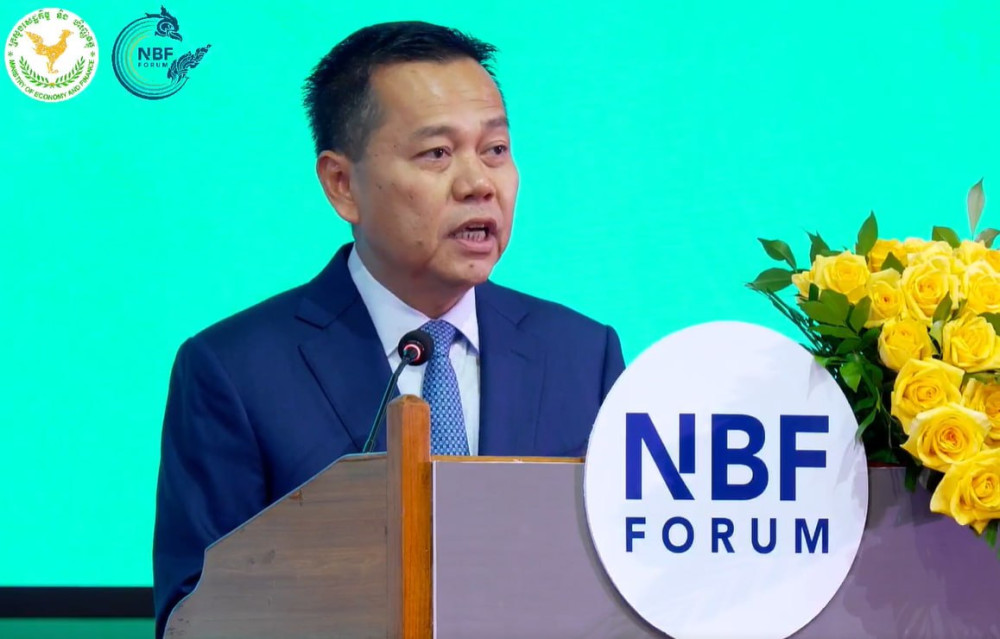
Under the theme “Integrating Government Financing Support for Economic Resilience,” the two-day forum was inaugurated by H.E. Phan Phalla, Secretary of State at the Ministry of Economy and Finance, at Phnom Penh Hotel.
Participants include representatives from relevant ministries and institutions, development partners and entrepreneurs.
The forum aims to explore financing opportunities, promote networking and experience‑sharing, and strengthen institutional and private‑sector capacity.
In his opening remarks, H.E. Phan Phalla noted that amid global economic shifts, access to capital and affordable financing are crucial catalysts for businesses of all sizes.
“This national forum will serve as a bridge and a strategic platform connecting the government’s supportive policies with the private sector’s practical needs,” he said.
H.E. Phan Phalla reiterated the Royal Government’s encouragement of SMEs to produce domestically supported products to meet market demand.
The Royal Government considers SME sector as a priority for economic growth and job creation, spanning manufacturing, agriculture, trade, tourism, food processing and services, and as a cornerstone of the country’s economic diversification efforts.
H.E. Phan Phalla urged entrepreneurs and business owners to actively engage in discussions, raise practical challenges and offer candid feedback.
“Inputs from the private sector and MSME owners are vitally necessary to help the Royal Government and relevant institutions improve policies and make support programmes more targeted and effective,” he added.
The forum comes as Cambodia steps up efforts to strengthen domestic manufacturing and expand local production to reduce dependence on imports, a priority heightened by global economic uncertainty and shifting regional supply chains.
By Chea Vannak