 KH
KH  FR
FR  AR
AR CN
CNCambodia Launches Landmark Agriculture Census, Revealing Decade of Sectoral Change
AKP Phnom Penh, May 19, 2025 --
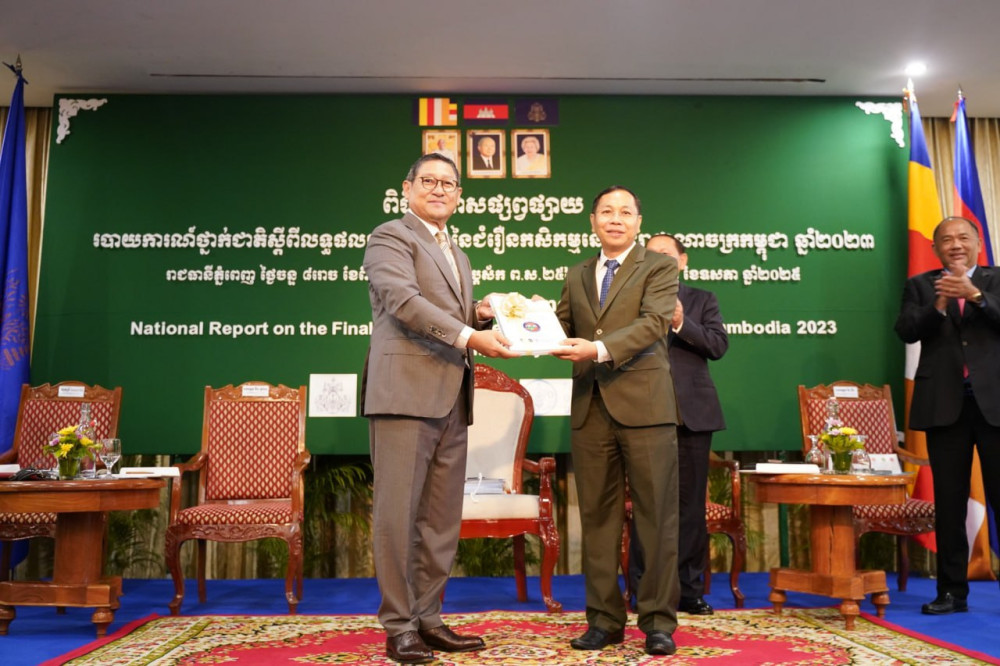
Cambodia launches the Census of Agriculture Cambodia 2023 (CAC 2023), unveiling a landmark dataset that provides the most detailed and nationally representative snapshot of the country's agricultural sector in over a decade.
Conducted by the National Institute of Statistics (NIS) under the Ministry of Planning, in collaboration with the Ministry of Agriculture, Forestry and Fisheries (MAFF), and with technical support from the Food and Agriculture Organisation of the United Nations (FAO), the CAC 2023 marks a major milestone in strengthening Cambodia’s agricultural data systems and promoting evidence-based policy formulation.
The census covered all 25 provinces, reaching 3.4 million households and identifying 1.85 million agricultural holdings across 3.2 million hectares of land.
For the first time since 2013, the Cambodian government now holds comprehensive data on land use, crop and livestock production, farming practices, and household characteristics that will support improved planning, investment, and climate resilience in the years ahead.
CAC 2023, the country's first agricultural census in more than a decade, provides detailed information into Cambodian agriculture's changing landscape.
The findings represent rising trends in farm size, diversification, mechanisation, and service access, providing policymakers, researchers, and development partners with critical data for national food security, poverty reduction, and sustainable rural development initiatives.
The census revealed that 54.2 percent of all Cambodian households were engaged in agriculture while the average landholding size is 1.7 hectares, though nearly 44 percent of holdings operate on less than 1 hectare.
Some 93.9 percent of agricultural households grow crops, while 58.6 percent raise livestock and/or poultry, stated the census, adding that 66.6 percent of total cropped area is planted to rice, the country’s dominant crop.
According to the census, 77.9 percent of households use inorganic fertilisers; 37.6 percent use organic fertilisers, while only 20.6 percent of holdings report using any irrigation, highlighting a key challenge in climate resilience.
While the census shows that traditional crop farming and livestock rearing remain dominant, it also reveals growing diversification.
Cassava is now planted on 13.2 percent of cultivated land—making it the second-most prominent crop after rice and poultry rearing is widespread, with 39.3 percent of agricultural households keeping chickens or ducks.
Forestry-related activities supplement the income of 19.5 percent of farming households, according to the census, adding that the mean age of the agricultural population is 31.8 years, with 49 percent considered dependents (under 15 or over 60).
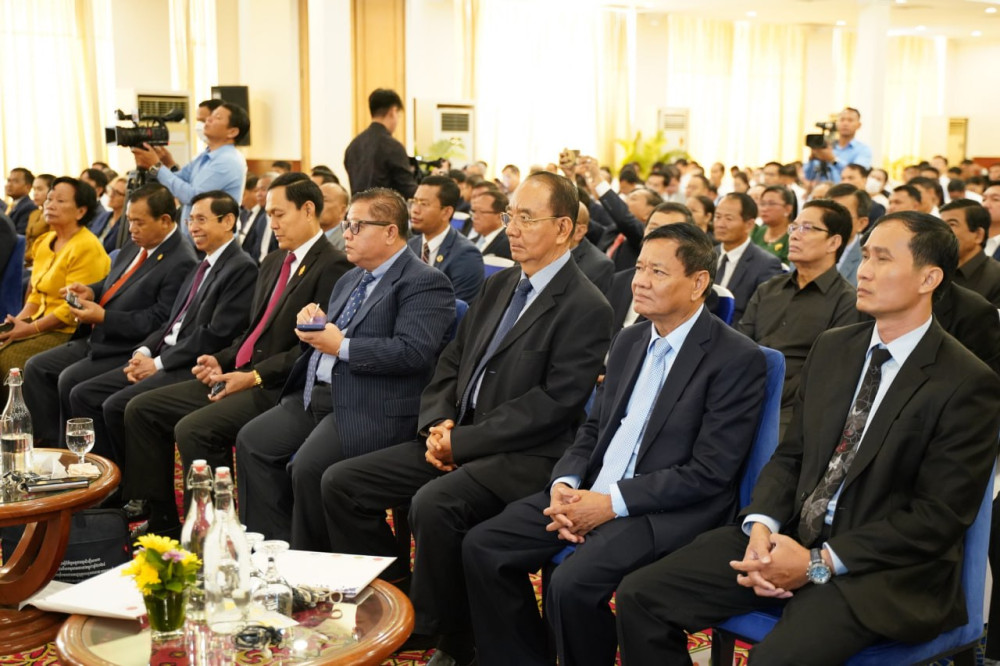
Speaking at the official launch, H.E. Sok Chenda Sophea, Deputy Prime Minister, underscored the importance of CAC 2023 as a critical input for agricultural policymaking.
He emphasised that the census not only strengthens Cambodia’s statistical foundation but also equips the government with reliable, up-to-date data essential for designing targeted interventions, allocating resources more effectively, and formulating policies that directly improve rural livelihoods and long-term agricultural resilience.
H.E. Bin Troachhey, Minister of Planning, explained how the data within the CAC 2023 report contributes to the strategic planning of the agriculture sector development 2023–2028, as well as national programmes on poverty reduction, economic growth, and climate resilience.
He emphasised that the census will be used to monitor and evaluate social, economic, and environmental policies in line with Cambodia's 2050 vision, where agriculture plays a central role in the Pentagonal Strategy - Phase 1.
Ms. Rebekah Bell, FAO Representative in Cambodia, underscored the significance of the Census of Agriculture Cambodia 2023 (CAC 2023) as a foundational source of data to inform evidence-based policymaking and drive agricultural transformation.
She noted that the high-quality data generated through the census is essential for advancing inclusive, resilient, and sustainable food systems in line with FAO’s vision for Better Production, Better Nutrition, a Better Environment, and a Better Life.
Ms. Bell also highlighted the relevance of the data in supporting ongoing initiatives such as the Cambodia Agriculture Forum & Exhibition (CAFE 2025), which promotes investment in Cambodia’s agri-food sector and fosters opportunities for inclusive rural development.
In today’s data-driven world, policymakers rely more than ever on accurate information and analysis to make informed decisions. Yet, missing and poor-quality data can affect the design of successful policies—thus, jeopardising the achievement of the Sustainable Development Goals (SDGs).
The Census of Agriculture Cambodia 2023 sets a new benchmark for agricultural statistics in the country. As Cambodia works to strengthen its agriculture sector and rural economy, this comprehensive dataset will serve as a vital tool for guiding evidence-based planning, targeted investment, and policy alignment.
With detailed insights on land use, production practices, input use, and household characteristics, the census provides a foundation for transforming Cambodia’s agri-food systems—enabling smarter resource allocation, improved service delivery, and stronger integration of smallholders into value chains.
It offers an opportunity to modernise agricultural planning and promote more inclusive, efficient, and resilient systems that can better respond to evolving challenges and market demands.
The Royal Government of Cambodia conducted the first census of agriculture in 2013.
By Chea Vannak