 KH
KH  FR
FR  AR
AR CN
CNCambodians to Celebrate Pchum Ben Festival This Weekend
AKP Phnom Penh, October 6, 2026 --
The “Pchum Ben” Festival or the Festival for the Dead, which is the second biggest festival for the Cambodian people in the entire country after the “Chaul Chhnam Thmei” (Khmer New Year), will be celebrated this year from Oct. 10 to 12.
The term “Pchum Ben” derives from the Khmer word “Pchum”, meaning “to gather”, and “Ben”, which refers to the Sanskrit word “Binda”, meaning the rice balls offered to the spirits of the deceased for the creation of their spiritual bodies after death.
Pchum Ben is one of Cambodia’s major traditional festivals, celebrated by almost all Cambodians on the 15th day following the 14 days of Kan Ben. Kan Ben begins on the first day of the waning moon of the month of Photrobot according to the Khmer lunar calendar. This period is dedicated to paying homage to deceased ancestors.
According to traditional beliefs, Yâma, the King of the Underworld, releases the souls of the deceased for a period of time so that they can return to their families. In accordance with Khmer customs and traditions, families prepare various foods and traditional cakes, including Num Ansorm and Num Korm, as offerings.
Num Ansorm is made from sticky rice mixed with coconut milk and filled with various ingredients, then wrapped in banana leaves and boiled in water. Num Korm is made from sticky rice dough filled with sweetened coconut flesh, wrapped in banana leaves and steamed.
According to some beliefs, the spirits of the deceased who fail to find offerings after visiting seven pagodas may curse their families.
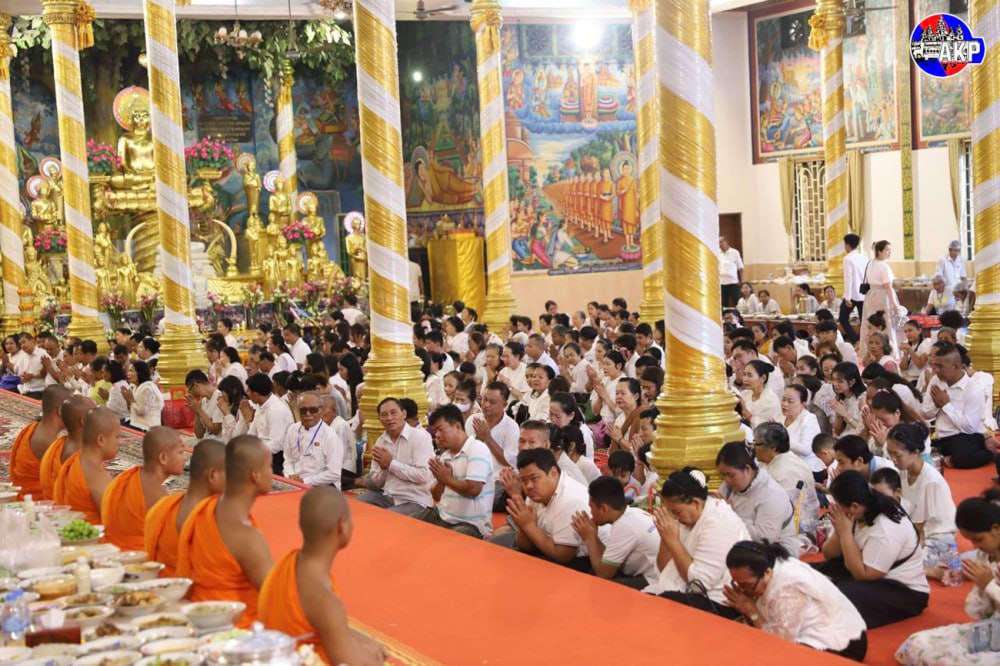
In the Buddhist tradition, devotees offer part of the food and cakes they have prepared to their elderly parents before taking the remainder to the monks on the final day of the festival. Religious elders often advise that “parents are the Buddha of each family”, and therefore a portion of the prepared food should be offered to them before it is given to the monks.
The tradition dates back to ancient times, when Cambodians who practised Brahmanism believed that the Atman, or soul, of each person continued after death through the cycle of transmigration and was reincarnated if it remained affected by impure deeds, preventing it from attaining complete liberation. Through the practice of Yoga or tapas during one’s lifetime, the Atman could ultimately attain liberation and reunite with Brahman, the supreme deity.
Inscriptions dating from the reign of King Yaçovarman I in the late ninth century indicate that rice balls, known as Bay Ben, were offered every month to the spirits of the deceased in the numerous monasteries established during his reign.
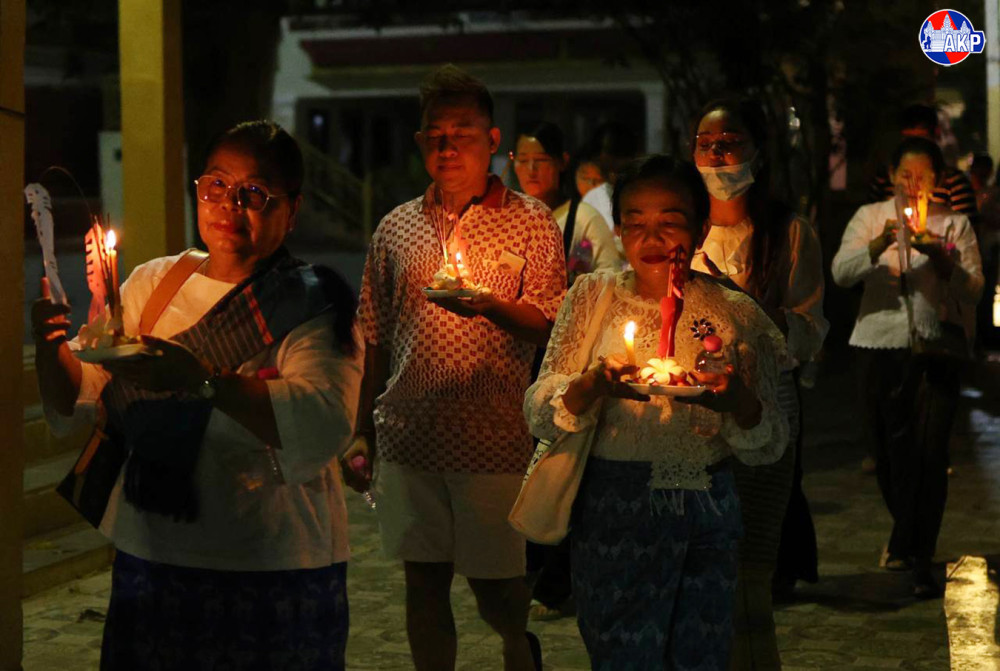
Today, particularly in rural areas, Cambodians continue to prepare rice balls made from sticky rice cooked with coconut milk and mixed with various ingredients. The Bay Ben are arranged on a tray around a pointed cake made from the same rice, known as Bay Battbor. It is covered with a cone made of banana leaves, with flowers, incense sticks and a candle placed on top.
Traditionally, the Bay Battbor is left at the pagoda, while the Bay Ben are brought home. Families often hold ceremonies at home to honour the spirits of their ancestors, with the Bay Ben forming part of a banquet attended by relatives, friends and acquaintances.
In homage to the Buddha, Cambodians also prepare a floral pyramid decorated with flowers and colourful paper in the Dharma-Sâla, the ceremonial hall of the pagoda. It is topped with an image of the sacred goose, or hamsa, which supports a candle. This floral arrangement is called “Phka-Ben”, meaning “Ben flower”.
The 15th day of the waning moon of the month of Photrobot is the most important day of Pchum Ben. On the eve of the festival, each Cambodian family prepares traditional sticky-rice sweets and various dishes, part of which is offered to elderly parents, while the remainder is given to monks, friends and acquaintances.
According to traditional beliefs, the spirits of the deceased can receive their share of these offerings through the religious rites conducted by monks, accompanied by prayers, candles and incense sticks.
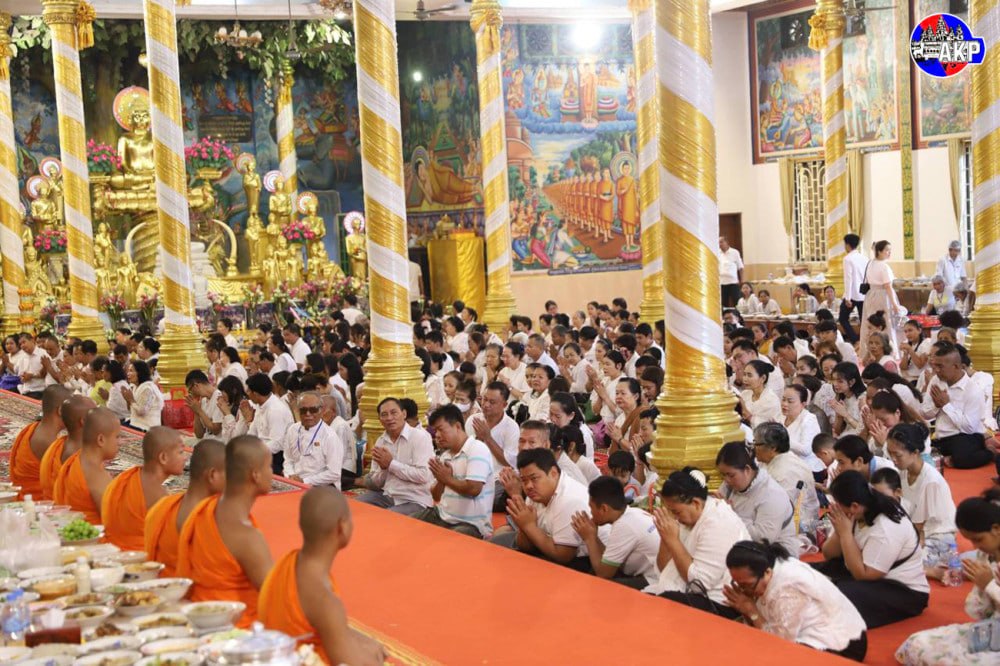
At nightfall, villagers and urban residents, particularly the elderly, go to pagodas to listen to sermons and participate in religious ceremonies, during which monks chant prayers.
In some regions, certain rituals are also held to commemorate Siddhârtha’s renunciation of his princely life to pursue an ascetic path in search of a remedy for human suffering. They are also associated with the preparation of a dish called madhu-pâyas, made from the purest ingredients and offered to the Buddha by a young woman named Sujâtâ.
At dawn, the faithful temporarily leave the pagoda and return with their families, carrying food, cakes and offerings by shoulder, on their heads, at their waists or in vehicles. These include Bay Battbor and Bay Ben, which are prepared with particular care.
Around noon, the Bangsukôl ceremony is held, during which the faithful ask monks to recite prayers for the repose of the souls of the deceased after offering the prepared food and sweets to the monks.
Nowadays, during the religious celebrations, some pagodas also invite singers accompanied by traditional two-stringed instruments to perform songs and prose relating to the building and defence of the nation, the achievements of patriots, and the exploits of historical or legendary heroes, adding to the solemnity of the festival.
The celebrations generally end in the afternoon. In the evening, families hold small banquets at home for their friends. The following day, in some communities, people prepare offerings for the guardian spirit of the land, praying for prosperity and good harvests.
The festival then comes to an end, while agricultural work continues with hopes for a good harvest and a productive farming season.
AKP